
June 9, 2026 · 7 min read
How to optimize your LinkedIn profile so the right people find you
Your LinkedIn profile is doing sales work whether you optimized it or not. Here's how to write it for the humans you want and the search box that ranks you.
Most profiles are written for nobody. Here’s how to write yours for the handful of people whose attention is worth having.
Key Takeaways
- Your profile is the page people land on after they see you anywhere else on LinkedIn. It does more quiet work than any single post.
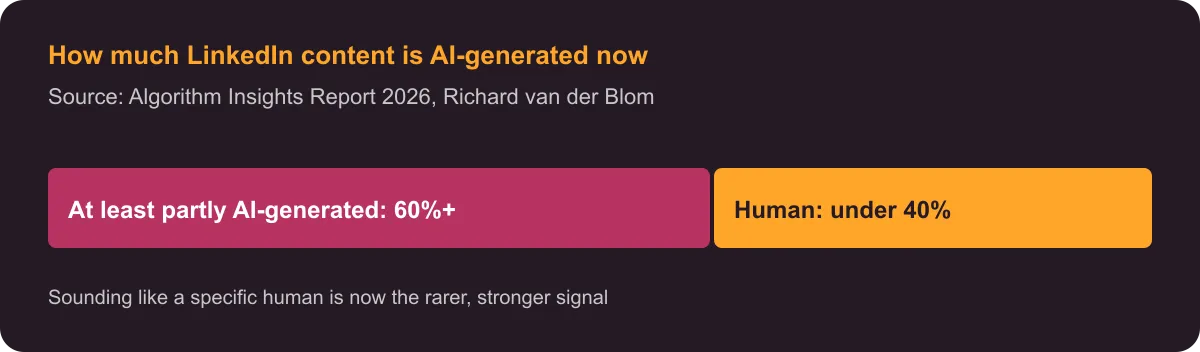
- Over 60% of LinkedIn content is now at least partly AI-generated (Algorithm Insights Report 2026, Richard van der Blom). A profile that sounds like a real, specific human is rarer, and more valuable, than ever.
- LinkedIn is the channel 89% of B2B marketers use for lead generation (Sopro, 2025). A weak profile leaks every visit it earns.
- More of your audience now finds you cold: posts from people you have never connected with make up over a third of the average 2026 feed (Algorithm Insights Report 2026, Richard van der Blom). Increasingly, your profile’s first reader is a stranger.
- Optimize for two readers: the human deciding whether to trust you, and the search box deciding whether to surface you.
Here’s the thing about your LinkedIn profile. You almost never see it the way everyone else does.
You see it logged in, from the inside. They see it cold. A name, a photo, a headline, and a half-second decision about whether you are worth their time. That decision happens before they read a word of your About section.
Most profiles lose that half-second. Not because the person is unimpressive, but because the profile was written for nobody in particular. Here’s how to write yours for the people whose attention actually matters, and how to make sure the right ones can find you in the first place.
Why your LinkedIn profile matters more than your next post
A post is seen once and scrolls away. Your profile is the page people come back to. It’s what a prospect checks after they read your comment, what a buyer opens before a call, what a partner scans before they reply. LinkedIn is the channel 89% of B2B marketers use for lead generation (Sopro, 2025), which means your profile is doing sales work whether you have optimized it or not. And more of that work now happens cold: in 2026, more than a third of the average LinkedIn feed comes from people outside your network (Algorithm Insights Report 2026, Richard van der Blom), so the person reading your profile increasingly met you through a post, not a handshake.
So the math is simple. A good post earns you a profile visit. A weak profile wastes it. You can spend months getting the engagement right and still lose the deal in the half-second someone spends deciding if your headline is worth a click.
The photo and headline do the most work
Two fields carry the first impression: your photo and your headline. They travel together everywhere, in search results, in comments, on connection requests, before anyone clicks through to the full page.
LinkedIn’s own data found that members with a photo get 21 times more profile views and 9 times more connection requests (LinkedIn, 2017). That figure is old. The logic is not. No photo reads as inactive, abandoned, or fake, and people do not reach out to a grey silhouette.
Your headline is the most valuable line on the page. It shows up in every search result, every comment, every invitation you send. Do not waste it on your job title. “CEO at Company” tells a stranger nothing. Say what you do and who you do it for. The headline that earns a click answers the reader’s only question: is this person useful to me?
There is a second reader for that headline now. LinkedIn files you under a topic and resurfaces you for it, and a headline that states one clear lane (who you help, and with what) is machine-readable in a way four stacked job titles never are. If your lane cannot be compressed into one sentence, the Interest Graph cannot compress it either, and it will not know what to resurface you for.
Your About section is not a resume
Write it in the first person. Lead with who you help and the problem you solve, not a chronology of where you have worked. Most About sections read like a CV narrated by HR. Yours should read like you, talking to one person.
Keep it short and specific. Three tight paragraphs beat ten polished ones nobody finishes. Open with the line that makes the right reader think “this is for me,” then earn the rest of their attention one sentence at a time.
How to make your profile searchable
Looking good and getting found are two different jobs. You can have the sharpest profile on the platform and still be invisible if you have not told LinkedIn’s search what you do.
A few things move the needle:
- Use the words your buyers use. Not your industry’s internal jargon. If a prospect would type “fractional CFO,” do not list yourself as a “finance transformation partner.”
- Put your core terms where search reads hardest. Your headline, your About, your experience titles. Repetition across those fields is not stuffing; it is consistency.
- List the skills people actually search for. Skills act as filters. The right ones put you in the result set; the missing ones leave you out of it.
- Claim a custom profile URL. It is cleaner to share, easier to remember, and signals you treat the profile as something you own.
What a strong profile looks like in 2026
Here is the new failure mode. AI can draft a complete, grammatical, utterly forgettable profile in about ten seconds, and a lot of people have let it. The result is a feed full of profiles that say everything and mean nothing.
This is not only an aesthetic problem. LinkedIn’s trust systems now actively penalise AI-generated filler and reward an authentic, distinct voice. Use AI to draft if you want. Just do not ship the draft. The profiles that work read like a specific human with a specific point of view, not a language model’s best guess at “professional.” Optimize for two things at once: findable and human. Findable and bland gets you into the search results and out of the running.
And remember what you are optimizing. The feed is rented. The algorithm is borrowed. If you want to control what people see when they look you up, take back your noisy feed and show up in the right comments so the profile visits are worth converting.
Frequently Asked Questions About LinkedIn Profile Optimization
Does my LinkedIn profile photo really matter?
Yes, more than almost any other single field. LinkedIn's own data found members with a photo get 21 times more profile views and 9 times more connection requests (LinkedIn, 2017). The number is dated, but the reason holds: no photo reads as inactive or fake, and people do not reach out to a silhouette.
What should my LinkedIn headline say?
What you do and who you do it for, in plain words. Skip the bare job title. The headline appears in every search result, comment, and connection request, so treat it as the one line that has to earn a click. Answer the reader's only question: is this person useful to me?
How do I get found in LinkedIn search?
Speak your buyer's language, not your industry's jargon, and put your core terms where search reads hardest: the headline, the About section, and your experience titles. List the skills people actually search for, since those act as filters that include or exclude you from the results.
Should I use AI to write my LinkedIn profile?
Draft with it if you like, but do not ship the draft. LinkedIn's trust systems now penalise AI-generated filler and reward a distinct voice. AI produces grammatical, generic profiles that read like everyone else's. The ones that work sound like a specific person with a point of view. Use AI for the first pass, then put yourself back into it.
Your profile is the one piece of LinkedIn you fully control. The feed is rented. The algorithm is borrowed. Your profile is yours.
Most people optimize everything except the thing they own. Start with the thing you own.

Co-founder, BossFeed, VeryCreatives